When it comes to choosing a yoga class, clarity on class style, teacher experience, and session length shapes a confident booking decision. Lost Art Yoga offers signature flows like MY hot flow. The restorative MY unwind, guided by E-RYT 500 instruction rooted in Kriya Yoga lineage. We design every online session to meet real bodies where they are, building strength, presence, and authentic self-connection from the very first breath.
Key Takeaways
- Online yoga teachers maintain student engagement by avoiding rookie mistakes during streaming or recorded sessions.
- Home practice requires dedicated setup to minimize distractions and complete pre-taped online classes successfully.
- Studio closures during lockdowns created zero in-person teaching opportunities, forcing instructors to transition online.
- Interactive yoga classes demand practical tips across five best practices for quality online instruction delivery.
Why does choosing a yoga class matter?
Selecting the right class shapes the entire arc of a practice before a single breath begins. Wellness has become a crowded marketplace, and reconnecting with yoga’s authentic roots feels more urgent as commercialization spreads across apps and studios alike. Choosing a yoga class is not just logistics — it’s the first act of self-trust.
We see so many seekers wander through trendy offerings, glowing lights, gimmicky themes, only to feel further from balance than when they started. That confusion is real. Many people crave mindfulness yet feel genuinely lost inside a sea of modern interpretations promising quick fixes. A thoughtfully chosen class cuts through that noise and points back toward something grounded.
What yoga class levels should beginners look for?
Yoga class levels exist to protect your nervous system, not to gatekeep the practice. Beginners thrive in slower, foundational formats that build breath awareness before intensity. Rushing into advanced flows often triggers frustration rather than transformation, which defeats the entire purpose of showing up.
How do online yoga booking tips make the search easier?
Smart online yoga booking tips start with looking past the schedule and toward the intention behind an offering. We designed Lost Art Yoga as a gateway. Not a single class, but an entry point into private soundbaths, retreats, and workshops that deepen over time. That consistency matters:
- Consistent brand identification helps practitioners recognize what they’re stepping into, session after session.
- Clear class descriptions reduce guesswork before you book.
- A defined entry point makes it easier to grow from one offering into the next.
Choosing well, in the end, becomes an act of coming home to yourself.
What yoga class levels should you know?
Four style categories shape nearly every studio schedule: Vinyasa, Hatha, Yin, and Hot Yoga. Each one carries its own rhythm, intensity, and intention, and knowing the difference removes so much of the guesswork from choosing a yoga class. We built our own offerings around this same principle. Meeting bodies and moods exactly where they are, whether we teach on the mat or through a screen.
Understanding yoga class levels starts with matching a style to a goal, not the other way around. Slower, more deliberate classes build a foundation. Faster, sweatier ones challenge stamina and heat tolerance. Deeply held postures release tension stored in connective tissue.
| Style | Pace | Best For |
|---|---|---|
| Hatha | Slow, foundational | New practitioners learning alignment |
| Vinyasa | Flowing, cardio-driven | Those craving movement and intensity |
| Yin | Slow, long-held | Deep stretching and stress relief |
| Hot Yoga | Heated, vigorous | Detoxifying sweat and endurance |
Which yoga style is best for beginners?
Hatha classes serve new students best, and we say this with real conviction. The pacing gives space to learn foundational poses before layering in speed or heat. The nervous system stays regulated instead of overwhelmed. From there, Vinyasa and Yin become natural next steps once the body finds its footing.
Do I have to pick one style forever?
Never. We welcome beginners into a full class schedule designed to feel approachable from day one. That schedule exists precisely so exploration feels safe. Many students move between hot flow sessions and slower, restorative offerings depending on what the week — or the nervous system — is asking for. Growth rarely follows a straight line, and neither should a practice.
What sets up a great online session?
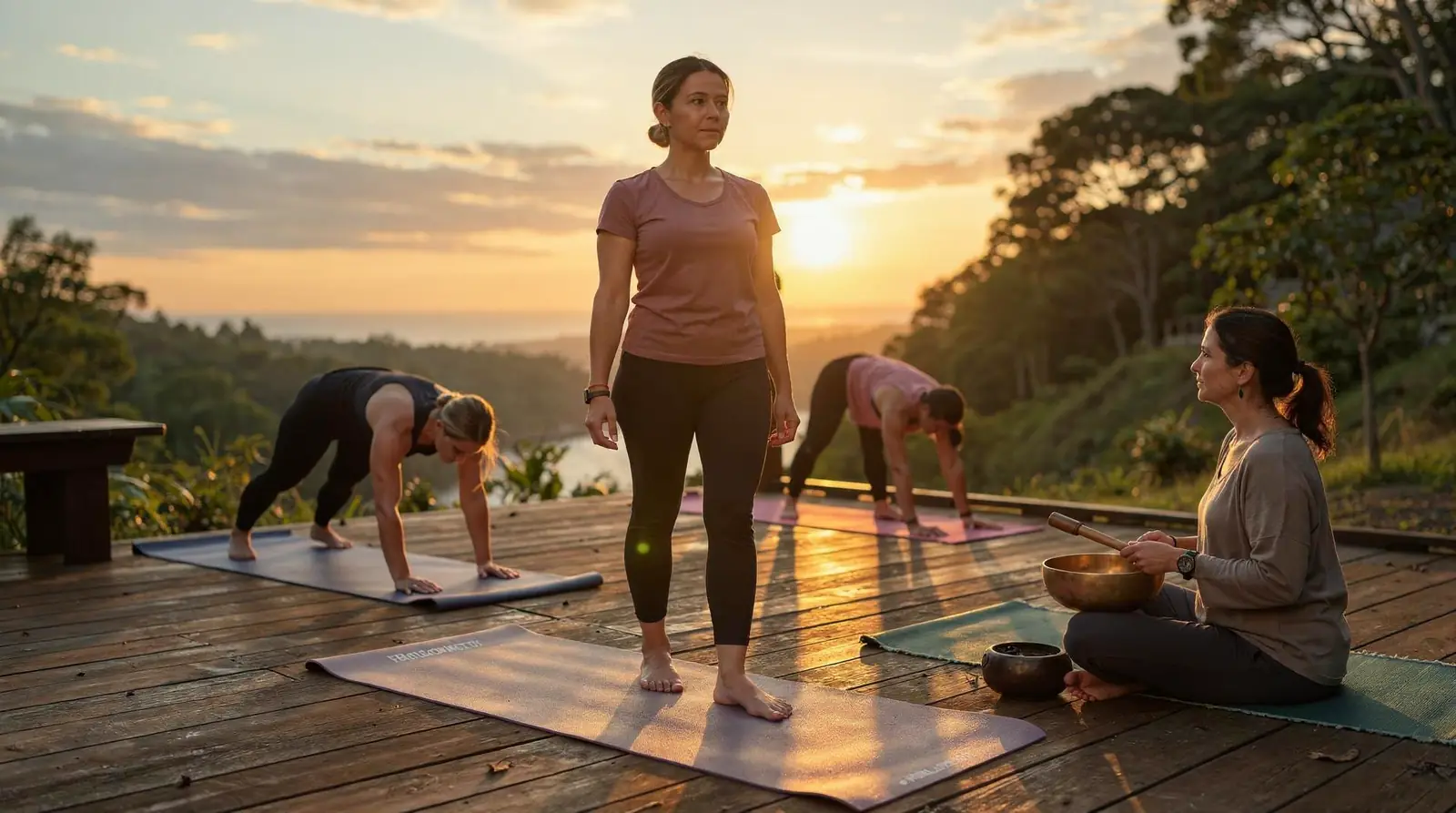
A dedicated practice space, a stable mat, and a screen positioned at eye level transform a scattered living room into sacred studio ground. We’ve watched students go from distracted to deeply present the moment they carve out even a small corner of their home just for practice. That intention matters more than square footage ever will.
Real connection happens when the camera stays on and the mind stays open. In our live sessions, we see each student in real time, and each student sees us and fellow practitioners moving together across screens. That mutual visibility recreates the energy of a shared studio floor, something pre-recorded videos simply can’t replicate. It’s part of why choosing a yoga class with live instruction, rather than a passive recording, changes the entire experience.
How do I stop distractions during an online yoga class?
Kids, pets, delivery drivers, and buzzing phones will always compete for attention. We recommend closing doors, silencing notifications, and letting housemates know your window of practice ahead of time. A few minutes of preparation protects the stillness you’re showing up to find.
Before booking, a few grounded habits make a real difference:
- Stabilize your setup — anchor your mat on carpet or hardwood so it won’t slip mid-flow
- Test your tech — check camera angle, lighting, and sound before class begins
- Guard your window — treat your practice time as non-negotiable, just like a studio appointment
Understanding yoga class levels helps you choose a session that matches your body’s current capacity, not someone else’s. And among the most useful online yoga booking tips we offer new students: reserve your spot early, so the space—both digital and physical—is ready to hold you.
How can you tell a class is authentic?
Authenticity announces itself before a single pose begins. A clean, spacious, uncluttered background tells us the teacher has built a space meant for practice, not a hasty video call. Real instruction also carries continuity — the same faces, the same rhythm, session after session.
We hold ourselves to Consistent brand identification. Students always recognize the teacher, the lineage, and the welcome waiting for them online. That familiarity matters more than it seems. When choosing a yoga class, students deserve to know exactly who is guiding them and why that guidance matters.
Authentic teaching also reaches beyond flexibility or a strong core. Reclaiming yoga’s deeper roots supports transformation across mental, emotional, and physical well-being, not just fitness gains. A class built on that foundation feels different in the body and the breath.
What makes an online yoga class feel real?
Real connection online often starts with community, not technology. Many practitioners find their original teachers and studios simply moved to live video, keeping the culture, cues, and camaraderie intact through a screen. That continuity, paired with clear yoga class levels so beginners and experienced students both feel met, signals a program built on relationship rather than convenience.
A few markers help separate authentic offerings from generic content:
- A visible, intentional teaching space free of clutter
- Live interaction, not a pre-recorded loop
- Familiar teachers returning week after week
- Language that honors tradition alongside modern accessibility
Smart online yoga booking tips start here: look for studios that name their lineage, show their teachers’ faces consistently, and invite real presence over passive viewing.
What booking tips help you stay consistent?
Consistency grows from small, repeatable choices rather than one big leap of willpower. A single class often tells your body more than weeks of research ever could—does the pace feel right, does the teacher’s voice settle your nervous system, does the room, real or virtual, invite you to stay? That kind of clarity sits at the heart of choosing a yoga class that actually fits your life.
We built our booking rhythm around that instinct. Rather than asking newcomers to commit to a full series right away, we offer drop-in style classes that let you test the waters first. This low-pressure entry point works especially well for anyone still sorting through yoga class levels, from gentle beginner flows to more dynamic, breath-driven sessions.
How does the online format support accountability?
Live-streamed classes create a two-way mirror. Our teacher sees you, and you see everyone practicing alongside you, turning a solo mat session into a shared commitment. That visibility makes it far easier to show up week after week instead of letting practice quietly slip off the calendar.
What makes an online booking easy to stick with?
The most useful online yoga booking tips come down to reducing decisions in the moment. Reserve a spot in advance, set a recurring reminder, and treat the confirmation email like an appointment made with a close friend. Consistent brand identification across every class, teacher, and session means you always know what to expect when you log on—and that familiarity becomes its own quiet reason to return, breath after breath, week after week.
FAQ
What should you consider before booking an online yoga class?
Look past the schedule and focus on the intention behind the offering, including class style, teacher experience, and session length. Clear class descriptions reduce guesswork and help you choose with confidence.
What class style works best for beginners?
Beginners thrive in slower, foundational formats like Hatha, which build breath awareness before intensity. Rushing into advanced flows often triggers frustration rather than transformation.
Why does teacher experience matter when booking online?
Teacher experience shapes the quality of guidance you receive, especially in streaming or recorded sessions. Lost Art Yoga offers E-RYT 500 instruction rooted in Kriya Yoga lineage, designed to meet real bodies where they are.
Conclusion
In closing, booking an online yoga class is an invitation to meet yourself exactly where you are—no pretense, no pressure, just you and the practice. Whether you’re stepping onto the mat for the first time or deepening an established practice, the most important thing is showing up with curiosity and self-compassion. Your body knows what it needs. Trust that, honor your pace, and allow the practice to unfold naturally. The transformation begins the moment you decide you’re worth the investment in yourself.
