
The Retreat shift


There is a moment most of us recognize — the one where you are running so fast you cannot remember why you started running in the first place. A retreat does not ask you to slow down. It asks you to stop entirely, so you can choose, with full clarity, what you actually want to return to.

In a culture that worships productivity, taking time to step away can feel indulgent, even irresponsible. But every tradition of wisdom — from ancient monasteries to modern neuroscience — agrees on one thing: withdrawal is not escape. It is medicine. The question is not whether you can afford to go on a retreat. It is whether you can afford not to.

The research bears this out. Studies on mindfulness immersions, nature-based retreats, and silent meditation programs consistently show measurable changes not just in mood, but in the structure of the brain itself, in hormone profiles, in immune function, and in the quality of decisions people make for months afterward.

The body holds everything the mind has been too busy to process. A retreat creates the conditions for that conversation to finally happen.

Six Core Benefits

What a Retreat Actually Does
The Nervous System Reset

You Cannot Fake


Modern life keeps the body in a near-constant state of low-grade alert. Notifications, deadlines, ambient noise, and the endless scroll of digital life all activate the sympathetic nervous system — the branch responsible for fight, flight, or freeze. Over time, this becomes the default setting, and many of us have simply forgotten what it feels like to be truly at ease.

A retreat creates the conditions your nervous system has been waiting for. Remove the triggers, add intentional movement, stillness, nature, and guided practice, and the body begins to downregulate. Cortisol drops. Heart rate variability — one of the most reliable markers of resilience and longevity — improves. Sleep deepens. This is not metaphor. It is physiology.

And crucially: this reset is not temporary. Research on mindfulness immersion programs shows participants retain measurable changes in stress reactivity for months, sometimes years, after the program ends. A week-long retreat can compress even more into that window.


—THE Clarity

That Changes Everything


One of the most commonly reported experiences of retreat — regardless of the tradition, the location, or the format — is unexpected clarity. People arrive carrying a question they have been circling for months, and find the answer surfacing quietly, without force, usually by day three or four.

This is not magic. When the cognitive load of daily life drops away, the prefrontal cortex — the seat of insight, creativity, and long-range thinking — gets bandwidth it rarely receives. The brain’s resting state, associated with self-reflection and meaning-making, deepens. Metaphorically and neurologically, you finally have room to think.

People return from retreats having made decisions they had been postponing for years: leaving careers that no longer fit, repairing relationships, starting the creative project, setting the boundary that needed setting. Not because someone told them to — but because they could finally hear themselves.


THE CONTAINER

Why Place and Facilitator
Matter Enormously

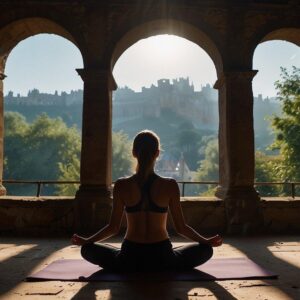
Not all retreats are the same. The quality of a retreat is determined not just by the program, but by the environment, the facilitators, and the container they hold. A hotel spa weekend and a week in a medieval Austrian castle with a trauma-informed guide are profoundly different experiences — and will produce profoundly different results.

Landscape affects the nervous system. Studies on nature immersion show measurable drops in anxiety after as little as two hours in a natural environment. When the setting is also architecturally and historically resonant — old stone, old forests, old light — it communicates something to the body that no urban wellness centre can replicate: that you are held by something larger and older than your problems.

The facilitator matters equally. The difference between information delivery and genuine transformation often comes down to the quality of presence in the room — whether the guide has done their own work, whether they can hold complexity without flinching, whether the space they create is genuinely safe for depth. This is rare, and it is worth looking for.  We are so proud at Lost Art Yoga to truly have the experience first hand along with the journey well traveled to ignite your transformation.