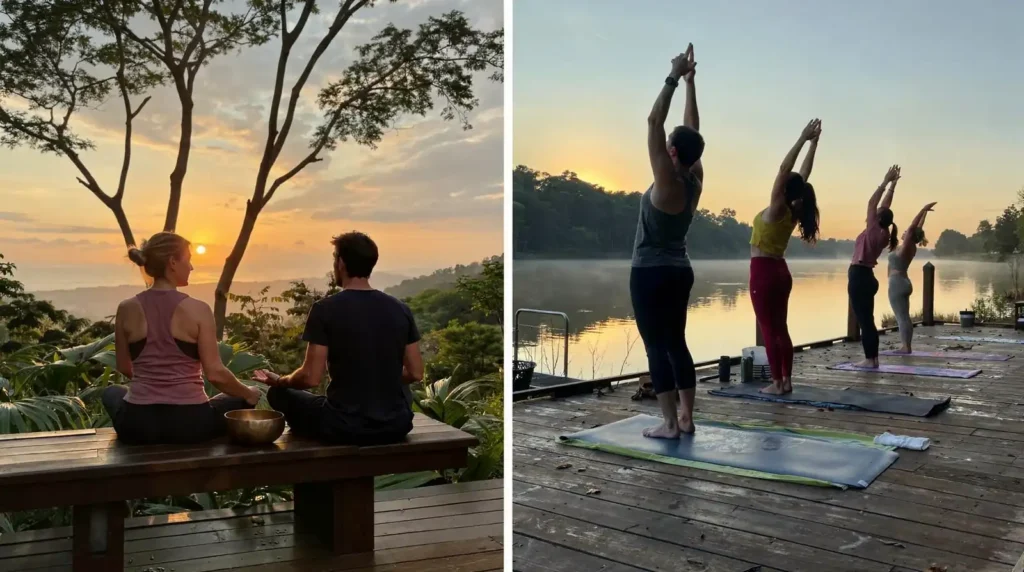
Choosing an online yoga class starts with matching style to intention: Hatha offers slow, foundational postures for beginners. Vinyasa builds strength through flowing sequences. We recommend checking class length, instructor credentials, and whether the practice includes breathwork—elements central to Lost Art Yoga’s approach of uniting mind, body, and breath for lasting transformation.
Key Takeaways
- Yoga styles include Hatha, Yin, Vinyasa, and Iyengar, each offering different benefits and intensity levels.
- Online yoga platforms offer both free and paid options, providing ultimate flexibility for busy schedules.
- Yoga practice unites mind, body, and breath through routine sessions to calm and relax.
- Choosing the right class requires matching your fitness goals, stress levels, and preferred intensity to style.
What Should You Know Before Choosing a Class?
Clarity about personal intention comes first, before any schedule browsing begins. Yoga unites mind, body, and spirit, so clearly naming our intentions—calm, strength, flexibility, connection—guides our choices effectively. Without that clarity, scrolling through online yoga class types turns into guesswork.
Stress often brings people to the mat in the first place. Our nervous systems carry an ancient fight-or-flight wiring. That deep-rooted stress response doesn’t switch off just because we’re staring at a screen instead of facing real danger. Recognizing that pull toward relief helps us pick a style that actually meets the moment we’re in.
Do I need a calming practice or an energizing one?
Some days call for stillness; others demand movement. We generally fall into one of two camps: those craving a quiet, meditative rhythm, and those needing something physically demanding to burn off restlessness. Naming which camp fits today narrows the field fast, before we even open a class list.
Before we choose a yoga class, we walk through a short mental checklist:
- Name the goal—stress relief, strength, mobility, or deep rest.
- Notice the body’s current state—tight, fatigued, energized, or sore.
- Check the schedule—how much time is realistically open right now.
- Consider the mood—craving silence or sound, structure or free flow.
How do I know which level fits me?
Studios and online platforms alike now offer yoga classes for different levels, from gentle beginner flows to demanding power sequences. We build a well-rounded practice around mindful movement, intentional breath, deep rest, resilience, and genuine connection—useful measures for judging any class before pressing play. That framework, paired with consistent brand identification across every session we lead, keeps our community rooted no matter which class we open next.
Which Yoga Class Types Fit Your Goals?
Goals determine style long before skill level ever does. A slower body benefits from grounded, static work; a restless mind often needs movement to burn through the noise. We built our approach around a simple truth: the right practice meets you where your energy already lives, not where you think it should.
Among yoga class types, three stand out as reliable starting points online. Hatha builds foundational poses at a measured pace, giving newer practitioners time to learn alignment before adding speed. Vinyasa suits those craving cardio-flow intensity, linking breath to movement in a faster, dynamic sequence rather than holding still. Yin, by contrast, fits anyone seeking deep stretching and stress relief through slower, longer-held postures that soften the nervous system.
How do I know which style matches my mood?
Notice what your body is asking for before you press play. A wired, anxious mind often settles faster in Yin’s stillness. Low energy sometimes needs the momentum of Vinyasa to shift. Trust that signal—it’s usually more accurate than your calendar.
Do studios and platforms offer more than one style?
Yes. Studios and online platforms commonly stock a range of styles—Vinyasa, Hatha, Yin, and Hot Yoga among them—so no single class defines the whole practice. This variety exists precisely so you can choose a yoga class based on how it actually feels in the body, not just its name on a schedule.
When you’re sorting through yoga classes for different levels, use this quick reference:
| Style | Best For | Pace |
|---|---|---|
| Hatha | Beginners, alignment | Slow, steady |
| Vinyasa | Cardio-flow, intensity | Fast, dynamic |
| Yin | Stress relief, deep stretch | Slow, held |
We keep our brand identification consistent across every class we teach, so wherever you find us, the same intention holds: practice that meets your real life, not an idealized version of it.
How Do You Match Classes to Your Level?
Level-matching starts with an honest look at where the body and breath are today, not where we wish they were. Skipping this step costs energy, motivation, and sometimes safety, especially for anyone newer to a mat-based practice. We built our approach around a simple truth: yoga is the union of mind, body, and breath, and that union develops through routine practice at any starting point.
Here is how we suggest approaching yoga classes for different levels:
- Assess current mobility, stamina, and any injuries before selecting a session.
- Sample a full program schedule, since studios offering everything from vigorous flow to restorative sessions prove that varied yoga class types can coexist under one roof.
- Test the waters with a drop-in class rather than committing to a full series right away.
- Notice how the breath responds during class, since calming the mind and steadying the breath is the real marker of progress.
- Adjust week to week; levels shift as strength and confidence grow.
What if I don’t know my level yet?
Most newcomers don’t, and that’s fine. A single drop-in session reveals more than any online quiz, giving a low-pressure way to gauge pace and intensity before enrolling further.
Can beginners and experienced students share a class?
Often, yes. Many studios design sessions so beginners modify while advanced students deepen the same pose, which is part of how we choose a yoga class thoughtfully rather than by label alone. The goal isn’t the fanciest posture; it’s the union of breath, body, and presence that yoga has always promised.
How Do You Evaluate an Online Teacher or Platform?
Scheduling freedom separates online practice from a fixed studio timetable. That freedom shapes how well a class fits into work, family, or an unpredictable week. We evaluate an online teacher or platform by asking whether it removes friction rather than adds it. A program worth trusting bends around a busy life instead of demanding that life bend around it.
Flexibility matters, but so does personalization. Some platforms build their entire model around adjusting pace, sequencing, and difficulty to the person practicing rather than delivering one scripted flow to everyone. We look for that adaptability first, because the best of the many yoga class types available online should respond to how a body feels that particular morning, not force it into someone else’s routine.
Credentials matter next. Instruction rooted in an established lineage — one that moves fluidly between Hatha, Vinyasa, Power, Yin, Yoga Nidra, and Restorative work — signals depth most single-style classes cannot offer. This range gives practitioners a genuine path when they choose a yoga class. One teacher trained across traditions can meet a nervous system in whatever state it arrives.
What makes an online yoga teacher trustworthy?
Trust comes from presence, not polish. We favor instruction that stays unpolished and unfiltered, prioritizing real connection over a slickly produced performance. That authenticity, paired with consistent brand identification across every class and platform touchpoint, tells a practitioner exactly who is guiding them and why it matters.
How do I know if a platform serves my level?
Look for yoga classes for different levels clearly labeled by intensity, pacing, and modification options. A trustworthy platform names its beginner, intermediate, and advanced offerings plainly, so no one guesses whether a class matches their current strength, flexibility, or energy that day.
What Mistakes Should You Avoid When Choosing?
Common missteps center on skipping trial classes, chasing popularity instead of fit, and prioritizing convenience over transformation. Three patterns show up again and again among students exploring different yoga class types online.
Skipping the trial class ranks as the biggest mistake we see. A single session answers the only question that truly matters: whether the practice, the teacher, and the format feel right in the body. Reading descriptions never replaces that felt sense of alignment.
Chasing popularity without matching intensity comes next. Some bodies crave stillness; others need something physically demanding to reconnect with their inner strength. Choosing a class because it trends online, rather than because it meets an actual need, leads to mismatched expectations and early burnout.
Prioritizing convenience over genuine transformation rounds out the list. The greatest shift in practice often comes from simply committing to being well, not from finding the shortest or easiest option.
How do I know if a class is truly a good fit?
Notice how the body feels afterward, not just during. When we choose a yoga class, we look for ease in breath, curiosity in the mind, and a pull to return — signs the format supports genuine well-being rather than temporary distraction.
Should beginners avoid advanced-level classes entirely?
Not necessarily. Exploring yoga classes for different levels builds resilience. Long as ego stays out of the equation and safety stays in.
