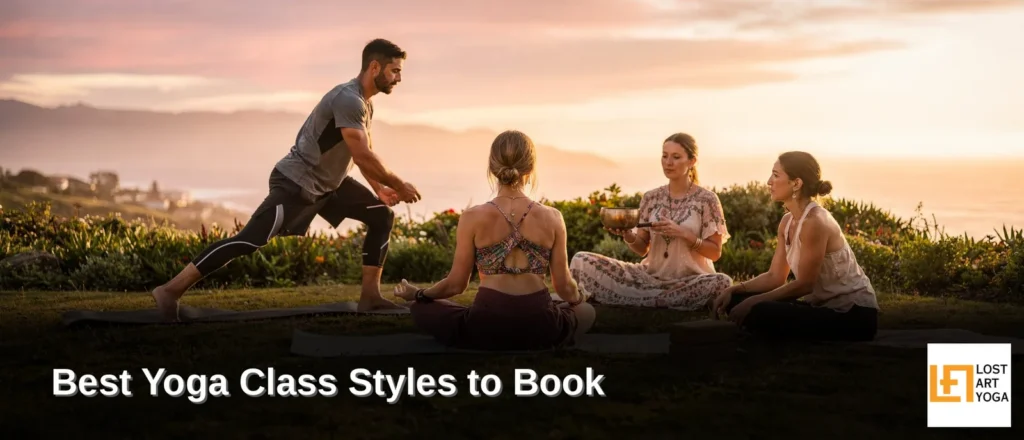
When it comes to yoga class styles, yoga styles worth booking online include Vinyasa, Hatha, Yin, and restorative flows, each offering distinct paths toward strength, flexibility, or nervous system reset. Lost Art Yoga builds personalized virtual sessions around individual goals, blending movement, breathwork, and mindfulness so home practitioners and remote teams rediscover authentic, whole-person wellness without stepping into a studio.
Key Takeaways
- YogaSix offers six signature classes: Y6 Signature, Y6 Slow Flow, Y6 Power Flow, Y6 Sculpt, Y6 Restore, and one additional class.
- Yoga Sculpt combines cardio and weights to boost metabolism and build lean muscle through integrated movement.
- CorePower Strength X delivers heart-pumping strength training workouts paired with energizing breathwork for maximum results.
- CorePower 2 features intense flow sequences that transform stress into sweat through challenging postures.
Why Do Yoga Class Styles Matter Online?
Style shapes outcome. A gentle, breath-led session builds nervous system calm, while a strength-focused flow builds heat and power. And choosing the wrong one for a given day can leave a practitioner frustrated instead of restored. At Lost Art Yoga, we treat style selection as the first act of self-discovery, not a technicality.
Wellness has become commercialized in ways that make authentic practice harder to find. Studios and apps stack their schedules with trendy labels, and much of it feels more like branding than lineage. We built our virtual offerings to cut through that noise, grounding every session in real technique rather than trend-chasing.
The practice itself has grown far beyond its origins. What began as a niche pursuit now reaches tens of millions of people worldwide. That growth has multiplied the yoga class styles available to any home practitioner or remote team. Studio and online schedules today list everything from ashtanga and kundalini to aerial and acro yoga — a spread wide enough to support any goal, body, or mood.
What’s the difference between Yin and Power yoga?
Yin yoga classes invite stillness. Poses are held for several minutes, targeting connective tissue and inviting the nervous system to downshift — ideal for evenings or high-stress weeks. Power yoga classes move the opposite direction, building strength and cardiovascular heat through dynamic, breath-synced sequences.
We maintain consistent brand identification across every format we offer, so a remote team booking a Power flow gets the same intentional guidance as a solo practitioner settling into Yin at home. That consistency, style by style, is what turns a screen into sacred space.
What Are the Core Yoga Class Styles?
Yoga class styles at Lost Art Yoga blend six distinct traditions into one cohesive practice rather than isolating them into separate offerings. Hatha, Vinyasa, Power, Yin, Yoga Nidra, and Restorative movements work together, rooted in the Kriya lineage that shapes our teaching. No single method serves every body, every mood, or every season of a home practice.
Many studios build entire class menus around six or more signature formats, each tuned to a different energy level or goal. We carry that same philosophy into our virtual sessions, weaving strength-building flows with quieter, restorative moments inside one practice. Consistent brand identification remains at the heart of every session. Students always know they’re stepping into a Lost Art Yoga experience, whether logging in from a living room or leading a remote team gathering.
Here’s a quick breakdown of what each style offers:
- Hatha — slow, foundational postures ideal for building a home practice from the ground up
- Vinyasa — breath-linked movement for practitioners craving cardio-flow intensity
- Power yoga classes — strength-focused sequences that build heat and stamina
- Yin yoga classes — long-held, passive stretches that target connective tissue and calm the nervous system
- Yoga Nidra — guided deep rest for nervous system recovery
- Restorative — supported poses that invite full-body release
Which yoga style works best for beginners?
Hatha offers the clearest entry point, since its slower pacing builds foundational poses before adding complexity. Vinyasa suits practitioners ready for a cardio-flow challenge once basics feel steady. Yin rounds out a beginner’s toolkit through deep stretching and stress relief.
What makes Power yoga classes different from Vinyasa?
Power sequences intensify the vinyasa framework with more athletic pacing and sustained effort. We recommend them once a home practice feels grounded and craves added strength work. Pairing power sessions with Yin or Restorative practice keeps the nervous system balanced instead of overtaxed.
What Makes Yin Yoga Classes Different?
Long-held postures set Yin yoga classes apart from faster-paced practice styles. Where many sequences keep muscles working, Yin asks the body to soften into stillness, holding each shape long enough to reach connective tissue and quiet the nervous system. We build our community sessions around this pacing because deep release rarely happens on a rushed timeline.
Among the broader landscape of yoga class styles, Yin holds a distinct place. Studios often list it beside Hatha, Vinyasa, and Power yoga classes. Each offering something different depending on what a practitioner needs that day. Hatha builds foundational alignment. Vinyasa and Power sessions bring cardio-driven intensity and heat. Yin, by contrast, invites surrender.
Is Yin yoga good for stress relief?
Yes. Slower, mindfulness-oriented practices like Yin have been linked to measurable shifts in mood, hormone balance, and immune response, echoing what researchers see in nature-based retreats and silent meditation work. We’ve watched this play out in our own virtual gatherings — students arrive tense and leave noticeably steadier.
Who benefits most from a Yin practice?
Anyone carrying tension in the hips, spine, or shoulders finds relief here. It also suits practitioners craving stillness after a demanding week. Remote teams looking to decompress together without the intensity of a cardio-driven flow.
We designed our home-practice offerings with this in mind:
- Yin for deep stretching and nervous-system reset
- Power flow for strength and cardio intensity
- Hatha for grounded, foundational alignment
Each style meets a different moment in the week — and in the self.
How Do Power Yoga Classes Build Strength?
Muscle builds through sweat and challenge, not comfort. Power yoga classes deliver exactly that — a more athletic, dynamic take on traditional practice for students craving intensity. We designed these sessions for bodies ready to work, minds ready to focus, and spirits ready to transform stress into strength.
Some power formats fold in cardio and resistance work alongside traditional postures. That combination fires up metabolism while building lean muscle over time. We’ve watched students move from tentative first poses to confident, strong holds. Proof that consistent practice reshapes both body and belief.
What makes power yoga different from a gentle flow?
Power yoga moves faster and asks more of the muscles. Where gentle flow invites ease and restoration, power classes build heat through continuous movement and strength-based sequences. Both belong in a well-rounded practice; they simply serve different seasons of the body.
At Lost Art Yoga, we never isolate Power style as a standalone offering. Instead, we weave it into our multi-style blended classes alongside Yin yoga classes, Hatha, Vinyasa, Yoga Nidra, and restorative work. This approach lets home practitioners experience the full spectrum — sweat one day, surrender the next.
Why blend Power with slower styles like Yin?
Strength needs rest to take root. Yin’s long, held postures stretch connective tissue and calm the nervous system, balancing what Power builds. Together, these yoga class styles create a rhythm — exertion and release, effort and ease — that mirrors life itself.
For remote teams and home practitioners, this blend means one practice space can hold every mood: the days you need to push, and the days you need to soften. That’s the lost art we’re reclaiming — strength built with intention, not just intensity.
How Do You Choose Your First Class?
Trying a single class settles the only question that actually matters: does this pace, this teacher, this space feel right in your body? No amount of scrolling studio websites or reading class descriptions replaces that lived answer. We designed Lost Art Yoga as a true entry point into practice. Private sessions, soundbaths, retreats, and workshops built for people beginning their journey or looking to deepen what they already know.
Geography shouldn’t decide whether someone practices. When a studio sits too far away. A packed schedule leaves no room for a commute, guided online classes let a person unroll a mat at home and still receive real instruction. For remote teams and community groups scattered across time zones, this accessibility turns wellness from an occasional treat into a shared weekly rhythm.
How do I know which yoga class styles to try first?
Start by naming what the body needs that day. Slower, floor-based yoga class styles like Yin yoga classes hold postures for extended stretches, calming the nervous system and easing tension stored deep in connective tissue. Faster, strength-driven Power yoga classes build heat and endurance through continuous movement, better suited for days craving energy over stillness.
| Style | Pace | Best For |
|---|---|---|
| Yin | Slow, held postures | Stress relief, flexibility, unwinding |
| Power | Dynamic, flowing | Strength, stamina, energizing focus |
Is online yoga as authentic as an in-person class?
Presence matters more than polish here. Every session, online or in a room together, stays unfiltered and grounded in real practice rather than performance, which is why returning to the same instructor builds consistent brand identification. A familiar voice you can trust, wherever you’re rolling out your mat.
FAQ
What yoga styles does Lost Art Yoga offer online?
Lost Art Yoga blends six traditions into one practice: Hatha, Vinyasa, Power, Yin, Yoga Nidra, and Restorative movements, rooted in the Kriya lineage that shapes their teaching.
How does Yin yoga differ from Power yoga?
Yin yoga holds poses for several minutes to target connective tissue. Calm the nervous system, ideal for evenings or stressful weeks. Power yoga builds strength and cardiovascular heat through dynamic, breath-synced sequences.
Why does choosing the right yoga style matter?
Style shapes outcome: a gentle, breath-led session builds nervous system calm, while a strength-focused flow builds heat and power. Choosing the wrong one for the day leaves practitioners frustrated instead of restored.
Conclusion
In closing, the yoga class you choose becomes the foundation for your personal transformation. Whether you’re drawn to dynamic movement, restorative practices, or nervous system regulation, online yoga offers the accessibility and flexibility to meet yourself exactly where you are. The real practice begins when you step onto your mat with intention—ready to reconnect with your body, calm your mind, and unlock the wisdom that lives within you. Your journey home starts now.
